


Castle Ward, Northumberland
Up to 1834
A parliamentary report of 1777 recorded a workhouse in operation at Heddon on the Wall for up to 50 inmates. Later premises were located at the east of the village in a building originally known as Heddon Square, built in 1796 to house mine workers. However, it was immediatley pressed into service to house a party of refugee Huguenot clerics and so became known as Frenchman's Row and later housed the parish poor.
After 1834
Castle Ward Poor Law Union formally came into existence on 30th September 1836. Its operation was overseen by an elected Board of Guardians, 79 in number, representing its 77 constituent parishes and townships as listed below (figures in brackets indicate numbers of Guardians if more than one):
Northumberland: Belsay, Berwick Hill, Bitchfield, Bolam Vicarage, Bolam, Bradford, Brenkley, East Brunton, West Brunton, Butterlaw, Black Callerton, Little Callerton, High Callerton, Capheaton, Cheeseburn Grange, Coaldcoats, Coxlodge, Dalton, Darras Hall, East Denton, West Denton, Dinnington, North Distington, South Distington, Eachwick, Fawdon, Fenwick, Gallowhill, North Gosforth, South Gosforth, Harlowhill, Harnham, Hawkwell, Black Heddon, East Heddon, West Heddon, Heddon-on-the-Wall, Heugh, Higham Dykes, Horton Grange, Houghton, Ingoe, Kearsley, Kenton (2), Kirkheaton, Kirkley, Mason, East Matfen, West Matfen, Milbourne Grange, Milbourne, Nesbitt, Newbiggen, Newburn Hall, Newburn, Newham Ogle, Ouston, Ponteland, Prestwick, Riplington, Rudchester, Ryall, East Shaftoe, West Shaftoe, Shilvington, Shortflat, Stannington (2), Sugley, Throckley, Trweick, Twigill, Wallbottle, Whatton, Whitchester, East and West Whorlton, Woolsington.
The population falling within the union at the 1831 census had been 15,539 with parishes and townships ranging in size from Darras Hall and Higham Dykes (population 15 each) to Kenton (1,106). The average annual poor-rate expenditure for the period 1834-36 had been £5,734 or 7s.5d per head of the population.
Initiallly, Castle Ward took over the old Heddon on the Wall workhouse. A new workhouse was erected at Ponteland in 1848. It was designed by John and Benjamin Green and accommodated about 120 inmates. The buildings were extended in the 1850s and again in 1910. The workhouse location and layout are shown on the 1915 map below:
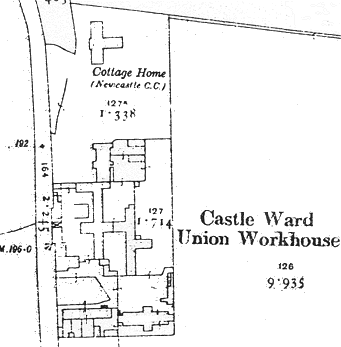
Castle Ward Site, 1915.
The workhouse later became Ponteland Poor Law Institution and then Ponteland Hospital.
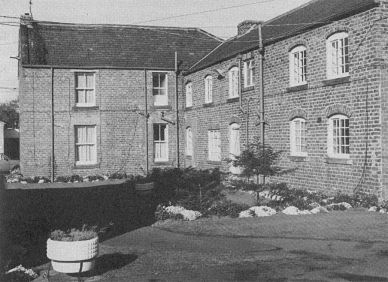
Castle Ward former workhouse buildings from the south-west
The buildings were demolished in the late 1990s and the site is now occupied by housing which, aptly, is called Guardians Court.
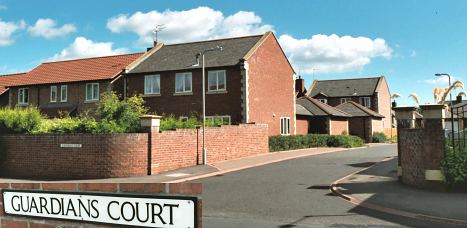
Castle Ward former workhouse site from the west, 2001.
© Peter Higginbotham.
Children's Home
The Castle Ward Union operated a children's home at Ponteland. In 1924, the home could accommodate 17 children. The 1915 map of the workhouse site (see above) shows a small cottage home to the north. However, the map indicates that it was run by Newcastle City Council rather than Castle Ward Union. The building still stands, now used as a nursery.
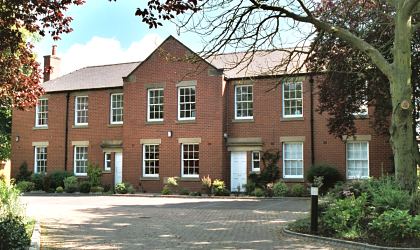
Ponteland cottage home from the west, 2001.
© Peter Higginbotham.
Staff
Inmates
Records
Note: many repositories impose a closure period of up to 100 years for records identifying individuals. Before travelling a long distance, always check that the records you want to consult will be available.
- Northumberland Archives, Woodhorn, Queen Elizabeth II Country Park, Ashington, Northumberland NE63 9YF. Virtually no local records survive.
Bibliography
- Higginbotham, Peter The Workhouse Encyclopedia (2014, The History Press)
Links
- None.
 For US readers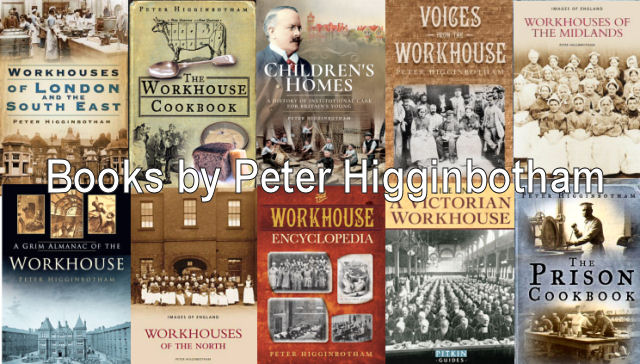
Unless otherwise indicated, this page () is copyright Peter Higginbotham. Contents may not be reproduced without permission.